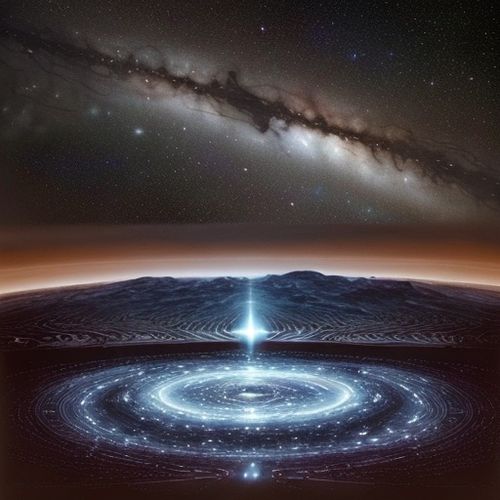
The night sky has always held a peculiar fascination for humankind, but in recent decades, this celestial curiosity has transformed into something far more profound. What astronomers once called "the final frontier" has become increasingly entangled with our terrestrial existence in ways that would have seemed like science fiction just two generations ago. This process - the gradual integration of cosmic perspectives into Earthly affairs - might best be described as celestialization.
From the vantage point of our ancestors, the stars were distant fires, the moon a mysterious lantern, and the sun a god's chariot crossing the sky. Today, we understand these celestial bodies with scientific precision, yet their cultural significance has expanded rather than diminished. The celestialization phenomenon manifests not just in our space programs and satellite networks, but in how we conceptualize our place in the universe, how we imagine our future, and even how we structure our societies.
The most visible aspect of celestialization is undoubtedly the commercialization of space. Where once only governments could afford to launch rockets, private companies now routinely send satellites, supplies, and even tourists beyond Earth's atmosphere. This shift has altered the economic landscape profoundly, creating what analysts call "the off-world economy" - a network of industries ranging from asteroid mining ventures to orbital advertising platforms. The very notion of property rights is being rewritten as lunar real estate becomes a traded commodity and geostationary orbital slots become prized corporate assets.
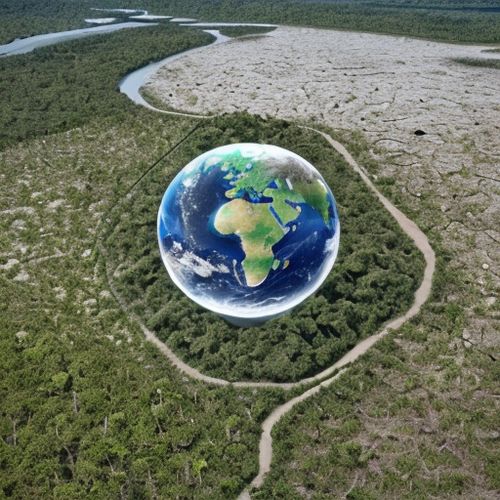
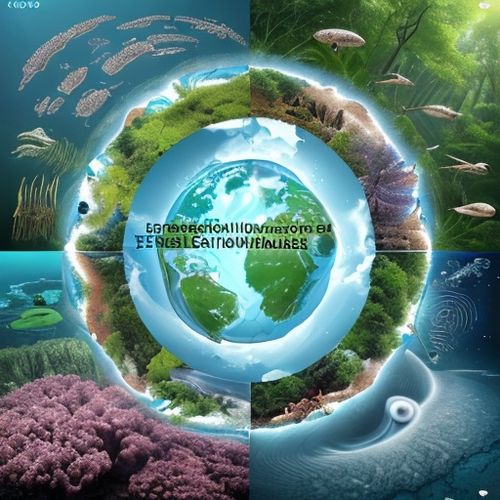
Yet celestialization runs deeper than commerce. Our philosophical frameworks have absorbed cosmic perspectives in subtle but significant ways. The famous "Overview Effect" described by astronauts - that profound cognitive shift experienced when viewing Earth from space - has permeated popular consciousness through countless documentaries and virtual reality experiences. Environmental movements routinely use satellite imagery to demonstrate planetary-scale phenomena like deforestation or melting ice caps. Climate change itself is understood through atmospheric science developed for studying other planets.
Religious thought hasn't remained untouched by this celestializing trend. Mainstream faiths increasingly grapple with theological questions raised by space exploration: If we discover life elsewhere, how does that impact creation narratives? What constitutes a sacrament in zero gravity? New religious movements explicitly incorporate cosmic themes, from UFO-based faiths to techno-spiritualities that envision humanity's destiny among the stars. Even traditional astrological beliefs have gained new traction in the digital age, with smartphone apps delivering daily horoscopes calculated by algorithms.
The arts have mirrored this celestial turn. Contemporary architecture increasingly mimics space habitats, with self-contained ecosystems and closed-loop life support systems appearing in cutting-edge green buildings. Musical composers create works using data sonification from radio telescopes, transforming cosmic phenomena into auditory experiences. Fashion designers experiment with materials and designs inspired by spacesuits, while culinary artists develop foods that could theoretically be consumed in microgravity.
Perhaps most surprisingly, celestialization has influenced governance models. The challenges of managing international space stations have necessitated unprecedented cooperation between nations, creating templates for transnational problem-solving. The Outer Space Treaty framework demonstrates how celestial concerns can shape terrestrial law, while the emerging field of "astrodiplomacy" suggests new paradigms for conflict resolution. Some political theorists argue that recognizing Earth as a single, fragile "spaceship" might be the key to overcoming nationalist divisions.
Education systems worldwide are adapting to this celestialized reality. Astronomy curricula now emphasize practical applications over mere stargazing, with students learning coding through asteroid trajectory calculations and biology through extremophile research relevant to astrobiology. The traditional science fair has evolved into "space hackathons" where teenagers design solutions for lunar base challenges. Even preschools incorporate basic rocketry principles into their STEM activities.
This cultural shift carries profound psychological implications. As humanity develops a "multi-planetary mindset," our collective sense of possibility expands exponentially. Depression-era children dreamed of putting food on the table; today's youth dream of putting habitats on Mars. This doesn't represent mere escapism, but rather a fundamental rewiring of how we conceptualize challenges and solutions. Problems that once seemed insurmountable - like climate change or resource scarcity - appear more manageable when framed within a cosmic context of abundance and technological potential.
The medical field provides unexpected examples of celestialization's reach. Research conducted for space missions has led to numerous Earth-based innovations, from compact ultrasound devices to advanced water purification systems. Telomerase research initially aimed at preventing astronaut aging now informs cancer treatments. Even the humble memory foam mattress traces its origins to NASA spacecraft cushioning technology. More conceptually, the study of human health in space environments has forced medicine to adopt more holistic models of wellbeing that integrate psychological, physical, and environmental factors.
Language itself hasn't remained immune to this celestial influence. Common speech increasingly borrows from astronautics terminology: We "launch" products, experience "gravity" in situations, navigate "orbits" of social circles. Corporate vision statements routinely reference "moonshots" and "north stars." This linguistic shift reflects deeper cognitive changes - we're beginning to think in terms of trajectories and systems rather than linear progressions.
As with any cultural transformation, celestialization presents both promises and perils. The same technologies enabling asteroid mining could accelerate destructive resource extraction. Satellite constellations bringing global internet access also create light pollution that hampers astronomical observation. The democratization of space risks repeating colonial patterns unless carefully managed. Perhaps the greatest challenge lies in maintaining our humanity as we reach for the stars - ensuring that celestialization enriches rather than diminishes our terrestrial existence.
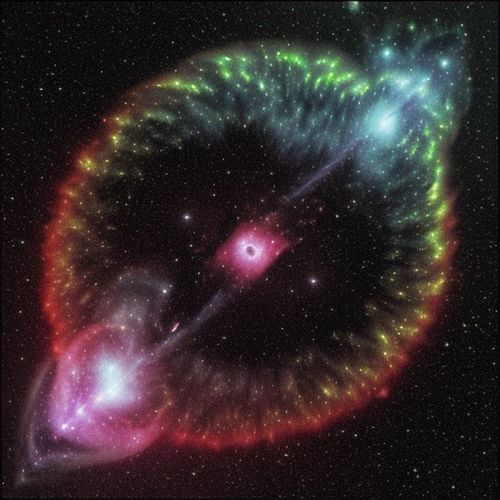
What becomes clear is that the boundary between "Earthly" and "cosmic" has grown porous. The particles in our bodies were forged in ancient stellar explosions; the technologies we develop for space reshape life on our home planet. Celestialization isn't about abandoning Earth for the stars, but rather recognizing that we've always been creatures of the cosmos - and that our future, whatever form it takes, will necessarily be written in both terrestrial and celestial ink.

By Thomas Roberts/Apr 19, 2025
By Amanda Phillips/Apr 19, 2025
By Daniel Scott/Apr 19, 2025
By Christopher Harris/Apr 19, 2025

By David Anderson/Apr 19, 2025

By Amanda Phillips/Apr 19, 2025
By Ryan Martin/Apr 19, 2025

By Jessica Lee/Apr 19, 2025

By Eric Ward/Apr 19, 2025
By Megan Clark/Apr 19, 2025

By Michael Brown/Apr 19, 2025

By Jessica Lee/Apr 19, 2025

By Laura Wilson/Apr 19, 2025

By Jessica Lee/Apr 19, 2025
By Emma Thompson/Apr 19, 2025

By Elizabeth Taylor/Apr 19, 2025

By Jessica Lee/Apr 19, 2025

By Elizabeth Taylor/Apr 19, 2025
By Lily Simpson/Apr 19, 2025

By Michael Brown/Apr 19, 2025