Plasma

Apr 19, 2025 By Emma Thompson

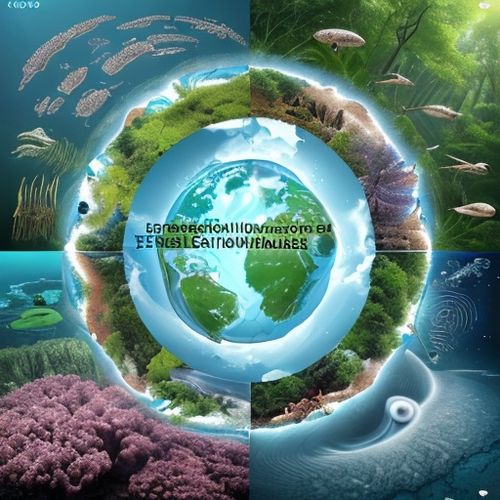
The enigmatic fourth state of matter known as plasma remains one of the most fascinating yet misunderstood phenomena in modern physics. Unlike solids, liquids, or gases that dominate our everyday experience, plasma exists under extreme conditions that fundamentally alter the behavior of atoms. This ionized gas permeates our universe, from the fluorescent lights in our homes to the vast interstellar nebulae light-years away.


What exactly is plasma? At its core, plasma forms when a gas becomes so energized that electrons break free from their atomic nuclei, creating a soup of charged particles. This ionization process typically occurs at extremely high temperatures - often thousands or millions of degrees - though certain cold plasmas can exist at room temperature. The resulting mixture of free electrons and ionized atoms exhibits unique electromagnetic properties that distinguish it from ordinary matter states.


The sun provides perhaps the most magnificent natural example of plasma in action. Our star's incredible heat strips hydrogen and helium atoms of their electrons, creating the swirling plasma that fuels nuclear fusion. Solar flares and coronal mass ejections demonstrate plasma's dynamic behavior as magnetic fields sculpt the charged particles into breathtaking arcs and loops. Similarly, the auroras dancing near Earth's poles reveal how our planet's magnetic field interacts with plasma from the solar wind.


Plasma technology has quietly revolutionized numerous industries, though its applications often go unnoticed. Neon signs and plasma televisions (now largely replaced by LEDs) were among the first commercial uses. Today, plasma plays crucial roles in semiconductor manufacturing, where plasma etching creates the microscopic circuitry powering our digital world. Medical applications include plasma sterilization of surgical instruments and experimental plasma treatments for wound healing and even cancer therapy.


In energy research, nuclear fusion represents the holy grail of plasma applications. Tokamak reactors like ITER aim to replicate the sun's fusion process by containing superheated plasma within powerful magnetic fields. While sustained fusion power remains elusive, recent breakthroughs in plasma containment and heating methods have brought scientists closer than ever to achieving this clean energy dream. The challenges are immense - maintaining plasma stability at 150 million degrees Celsius requires unprecedented engineering solutions.


Space exploration relies heavily on plasma physics. Ion thrusters, which use electric fields to accelerate plasma, now propel many satellites and deep-space probes with far greater efficiency than chemical rockets. Understanding space plasma helps protect astronauts and equipment from radiation as humanity ventures beyond Earth's protective magnetosphere. Plasma shields are even being investigated as potential protection against cosmic rays during future Mars missions.


Astrophysicists study plasma to unravel cosmic mysteries. Over 99% of the visible universe exists in the plasma state, from the tenuous interstellar medium to the superheated accretion disks around black holes. Plasma physics explains phenomena like pulsar emissions, quasar jets, and the formation of galactic magnetic fields. Without understanding plasma, we cannot comprehend the large-scale structure and evolution of the cosmos.


Environmental applications of plasma technology are emerging as powerful tools against pollution. Plasma torches can break down toxic waste at the molecular level, converting hazardous materials into harmless compounds. Experimental plasma systems show promise for removing greenhouse gases from industrial emissions and even generating clean fuels by rearranging molecules in air or water. These applications leverage plasma's ability to provide highly reactive chemical environments without extreme temperatures.


The study of plasma continues to yield surprises. Laboratory experiments with complex plasmas - mixtures of ionized gas and microscopic particles - reveal self-organizing structures that mimic crystalline arrangements. These "plasma crystals" exhibit behaviors bridging the gap between classical and quantum physics. Researchers are also investigating plasma's role in ball lightning, that mysterious atmospheric phenomenon occasionally observed during thunderstorms.


As our understanding of plasma deepens, so does our ability to harness its potential. From cutting-edge manufacturing to revolutionary energy solutions, from space propulsion to environmental remediation, plasma technology promises to shape humanity's future. The same substance that lights distant stars may one day power our civilization cleanly and efficiently, if we can master its complexities. Plasma stands as a testament to how fundamental physics research can transform our world in unexpected ways.


Looking ahead, the next decade may see plasma technologies reach critical milestones. Fusion research approaches potentially net-energy-positive reactors, while plasma-based manufacturing techniques enable ever-smaller and more powerful electronics. Medical plasma applications could transition from experimental treatments to standard clinical practice. As we expand our presence in space, plasma propulsion will likely become the workhorse of interplanetary travel.


The story of plasma reminds us that the most common state of matter in the universe remains the least familiar in our daily lives. Yet through scientific inquiry and technological innovation, we're learning to work with this extraordinary substance that literally surrounds us in space and exists within every flame. Plasma represents both our cosmic heritage and perhaps our sustainable future - a bridge between the physics of stars and practical solutions here on Earth.

Recommend Posts
Science

Please provide the title you would like to be translated into English.

By Thomas Roberts/Apr 19, 2025

The laboratory hums with an unusual energy as researchers peer through microscopes not at cells, but at something far stranger - the quantum vibrations within chlorophyll molecules. What began as theoretical speculation in the 1930s has blossomed into one of science's most provocative frontiers: quantum biology. This emerging field suggests that nature may have been exploiting quantum mechanics long before humans discovered it.
Science

Please provide the title you would like to have translated into English.

By Amanda Phillips/Apr 19, 2025

The concept of information energy has emerged as one of the most fascinating interdisciplinary ideas of our digital age. Unlike traditional forms of energy that power our machines and cities, information energy represents the transformative potential contained within data, knowledge, and communication flows. This intangible yet powerful force shapes everything from individual cognition to global economic systems.
Science

Please provide the title you would like to have translated into English.

By Daniel Scott/Apr 19, 2025

The field of mathematics has long been regarded as the foundation of scientific inquiry and technological advancement. From ancient civilizations to modern-day innovations, the study of numbers, patterns, and structures has shaped human understanding in profound ways. Mathematicians, often working behind the scenes, play a crucial role in developing theories that later become the backbone of engineering, physics, computer science, and even economics. Their work is not just about solving equations but about uncovering the hidden logic that governs our universe.
Science

Please provide the title you would like to have translated into English.

By Christopher Harris/Apr 19, 2025

The world stands at a critical juncture where environmental degradation has shifted from being a distant concern to an immediate crisis. The term "Environment D" encapsulates this deteriorating state, where deforestation, pollution, and climate change converge into a singular threat. Unlike previous generations, we no longer have the luxury of time to debate solutions; action is required now. The consequences of inaction are already visible—extreme weather events, dwindling biodiversity, and communities displaced by environmental disasters. This is not just an ecological issue but a humanitarian one, demanding global cooperation and innovative approaches.
Science

Please provide the title you would like to have translated into English.

By David Anderson/Apr 19, 2025

The concept of systemic generation—whether in biological, technological, or organizational contexts—has become a focal point of modern scientific and philosophical discourse. At its core, it represents the emergence of complex structures from simple, often decentralized components. This phenomenon is observable in everything from ant colonies to artificial intelligence networks, raising profound questions about the nature of creation and adaptation.
Science

Please provide the title you would like to have translated into English.

By Amanda Phillips/Apr 19, 2025

The field of synthetic biology represents one of the most groundbreaking scientific frontiers of our time, merging principles from biology, engineering, and computer science to redesign biological systems for useful purposes. This emerging discipline goes beyond traditional genetic modification by applying engineering concepts to biology - designing and constructing new biological parts, devices, and systems that don't exist in nature.
Science

Earth's Objects

By Ryan Martin/Apr 19, 2025

The Earth beneath our feet holds mysteries that have captivated scientists for centuries. Geophysics, the study of Earth's physical properties and processes, provides us with tools to unravel these mysteries without digging deeper than necessary. This field sits at the fascinating intersection of physics, geology, and mathematics, offering insights into everything from earthquake prediction to mineral exploration.
Science

Please provide the title you would like to have translated into English.

By Jessica Lee/Apr 19, 2025

The concept of a "calculation god" has long fascinated mathematicians, computer scientists, and even philosophers. This mythical figure represents the pinnacle of computational ability, capable of solving any problem instantaneously, no matter how complex. While the idea may seem like pure fantasy, modern advancements in quantum computing and artificial intelligence are bringing us closer to this theoretical ideal than ever before.
Science

Biological Entities

By Eric Ward/Apr 19, 2025

The field of biotechnology has emerged as one of the most transformative forces in modern science, reshaping industries from healthcare to agriculture. At its core, biotechnology harnesses cellular and biomolecular processes to develop technologies and products that help improve our lives and the health of our planet. The rapid advancements in this domain are not just scientific curiosities; they are paving the way for solutions to some of humanity's most pressing challenges.
Science

Asteroid Transformation

By Megan Clark/Apr 19, 2025

The night sky has always held a peculiar fascination for humankind, but in recent decades, this celestial curiosity has transformed into something far more profound. What astronomers once called "the final frontier" has become increasingly entangled with our terrestrial existence in ways that would have seemed like science fiction just two generations ago. This process - the gradual integration of cosmic perspectives into Earthly affairs - might best be described as celestialization.
Science

Please provide the title you would like to have translated into English.

By Michael Brown/Apr 19, 2025

The world of technology is on the cusp of a revolution so profound that it may redefine what it means to be human. At the heart of this transformation lies nanotechnology - the science of manipulating matter at the atomic and molecular scale. While still in its relative infancy, this field promises breakthroughs that could solve some of humanity's most pressing challenges while simultaneously presenting ethical dilemmas we've never before faced.
Science

Nanophotonics

By Jessica Lee/Apr 19, 2025

The world of photonics has entered a revolutionary phase with the emergence of nano light technologies. These cutting-edge developments are reshaping how we manipulate and utilize light at scales previously thought impossible. From quantum computing to medical diagnostics, nano light applications are pushing the boundaries of what's achievable in optics and light-based technologies.
Science

Metamaterials

By Laura Wilson/Apr 19, 2025

The world of materials science has witnessed a revolutionary leap with the advent of metamaterials. These artificially engineered materials possess properties not found in naturally occurring substances, challenging our fundamental understanding of physics. Unlike conventional materials, which derive their characteristics from molecular composition, metamaterials gain their extraordinary traits from precisely designed structures at the microscopic or nanoscopic level.
Science

Nanomedicine

By Jessica Lee/Apr 19, 2025

The field of nanomedicine has emerged as a revolutionary frontier in modern healthcare, blending nanotechnology with pharmaceutical science to create targeted therapeutic solutions. Unlike conventional drugs, which often disperse throughout the body, nanomedicines are engineered to deliver payloads with precision, minimizing side effects and maximizing efficacy. This paradigm shift is reshaping how we treat diseases, from cancer to neurodegenerative disorders, offering hope where traditional therapies have fallen short.
Science

Plasma

By Emma Thompson/Apr 19, 2025

The enigmatic fourth state of matter known as plasma remains one of the most fascinating yet misunderstood phenomena in modern physics. Unlike solids, liquids, or gases that dominate our everyday experience, plasma exists under extreme conditions that fundamentally alter the behavior of atoms. This ionized gas permeates our universe, from the fluorescent lights in our homes to the vast interstellar nebulae light-years away.
Science

Please provide the title you would like to have translated into English.

By Elizabeth Taylor/Apr 19, 2025

The world of nanotechnology has witnessed a groundbreaking innovation with the advent of nanopores. These tiny, molecular-scale holes have opened up a realm of possibilities, from DNA sequencing to advanced filtration systems. The science behind nanopores is as fascinating as it is complex, bridging the gap between biology, chemistry, and engineering. What makes them so remarkable is their ability to manipulate matter at an unprecedented scale, offering solutions to some of the most pressing challenges in modern science.
Science

Fault Self-Generation

By Jessica Lee/Apr 19, 2025

The concept of self-diagnosing faults, often referred to as fault self-diagnosis, has become a cornerstone in modern engineering and technology. From automotive systems to industrial machinery, the ability of a system to identify and sometimes even rectify its own malfunctions has revolutionized maintenance and operational efficiency. This capability not only reduces downtime but also minimizes human intervention, making processes more autonomous and reliable.
Science

Energy Acquisition

By Elizabeth Taylor/Apr 19, 2025

The concept of energy harvesting has emerged as one of the most promising solutions to our growing energy challenges. Unlike traditional power generation methods that rely on centralized systems and finite resources, energy harvesting taps into ambient energy sources that would otherwise go unused. This revolutionary approach is reshaping how we think about power generation and consumption across industries.
Science

Please provide the title you would like to have translated into English.

By Lily Simpson/Apr 19, 2025

The concept of environmental adaptation has never been more critical than in our current era of rapid ecological change. Across the globe, species, ecosystems, and human communities are being forced to adapt to shifting conditions at an unprecedented pace. This complex dance of adjustment reveals both nature's remarkable resilience and the sobering limits of adaptability when changes occur too quickly.
Science

Human-Machine Collaboration

By Michael Brown/Apr 19, 2025

The concept of human-machine collaboration has evolved from science fiction to an everyday reality. What once seemed like a distant future—where humans and machines work side by side—is now unfolding across industries, reshaping how we live, work, and innovate. This partnership is not about machines replacing humans but augmenting our capabilities, allowing us to achieve what was previously unimaginable.