As winter approaches in Switzerland, residents and property owners turn their attention to a critical seasonal task: protecting windows from freezing temperatures. The Swiss have long perfected techniques to prevent frost damage while maintaining energy efficiency—a necessity in a country where winter temperatures regularly plummet below zero. Unlike hasty last-minute solutions seen elsewhere, Switzerland’s approach blends tradition with innovation, ensuring windows withstand months of icy conditions without compromising functionality or aesthetics.
The Science Behind Window Freezing
Understanding why windows freeze is key to preventing it. Condensation forms when warm indoor air meets cold glass surfaces, creating moisture that turns to ice in subzero temperatures. Over time, this freeze-thaw cycle can damage seals, crack frames, and even shatter glass. Swiss homes, often designed with large windows to maximize alpine views, face heightened risks due to greater surface area exposed to cold. Historically, this led to drafts and heat loss, but modern solutions have transformed winter window care into a precise science.
Traditional Swiss Methods: More Than Just Insulation
Before thermal panes became standard, Swiss households relied on layered defenses. Exterior wooden shutters—still common in villages—were closed at dusk to create an insulating air gap. Indoors, thick woolen curtains lined with horsehair blocked drafts, while families applied thin animal fat or beeswax to window edges as a moisture barrier. Perhaps most ingeniously, some placed shallow trays of salt between inner and outer windows to absorb humidity overnight. These methods, passed through generations, reveal a cultural attentiveness to microclimates within the home.
Modern Materials Meet Alpine Conditions
Contemporary Swiss windows often feature triple-glazed glass filled with argon gas and low-emissivity coatings. However, even advanced technology requires seasonal preparation. Each autumn, specialists recommend checking for microscopic cracks in sealants—a process called Fugenkontrolle (joint inspection). Silicone-based lubricants are applied to moving parts to prevent freezing shut, while conductive thermal tapes are placed along frames in extreme climates. Notably, Swiss manufacturers produce window-specific heating cables that consume less energy than standard models, reflecting the nation’s balance of innovation and sustainability.
The Ventilation Paradox: Cold Air as Protection
Contrary to instinct, Swiss guidelines sometimes advise brief bursts of ventilation during freezing spells. Stagnant indoor air raises humidity levels, increasing frost formation. By opening windows wide for 5-10 minutes—a technique called Stosslüften—residents replace moist air with drier outdoor air while minimizing heat loss. This practice, timed for midday when temperatures peak, demonstrates how Swiss methods leverage precise environmental understanding rather than brute-force heating.
Architectural Integration: Windows Designed for Winter
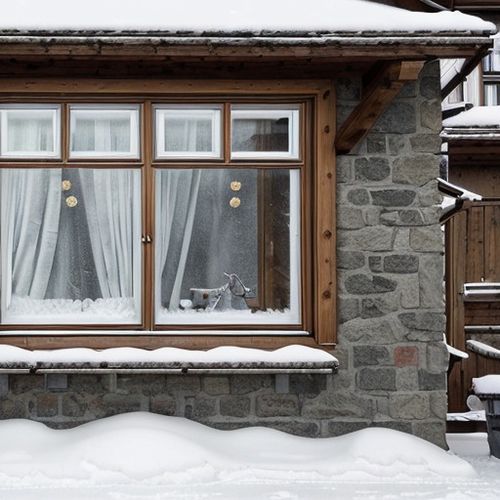
New constructions in Switzerland increasingly incorporate passive winterization features. Recessed window installations create natural insulation pockets within thick walls. Some high-altitude homes install angled "snow windows" with downward-sloping exterior sills to shed accumulating snow. The most cutting-edge designs use phase-change materials in frames that absorb excess heat during the day and release it at night, maintaining consistent surface temperatures. These solutions show how Swiss design thinks beyond temporary fixes to systemic cold-weather performance.
When Frost Strikes: The Swiss Approach to Thawing
Despite precautions, ice sometimes forms. Swiss experts warn against using sharp tools or hot water—common mistakes that cause permanent damage. Instead, they recommend alcohol-based sprays that lower water’s freezing point or specially formulated window-safe de-icers. For persistent cases, a hair dryer kept at least 30cm away and moving constantly prevents thermal shock. Crucially, any melted moisture is immediately dried to prevent refreezing, often with vacuum-equipped window squeegees unavailable in most countries.
Cultural Factors: Why Switzerland Excels
This meticulous attention stems from deeper cultural values. Swiss building codes mandate annual winter preparedness checks in rental properties—a rarity globally. Vocational schools teach window winterization as part of carpentry and janitorial training. Even the national penchant for precision plays a role: hygrometers measuring indoor humidity are as common as thermostats in Swiss homes. Such societal integration of preventive maintenance creates a culture where frozen windows are the exception rather than the norm.
From medieval shutters to nanotechnology coatings, Switzerland’s winter window strategies form an evolving dialogue between environment and habitation. The results speak for themselves: despite harsh winters, Swiss buildings maintain remarkable energy efficiency with minimal frost damage. As climate patterns shift, these time-tested yet adaptive methods offer valuable insights for colder regions worldwide—proving that sometimes, the clearest views come from the best-protected windows.
By Christopher Harris/Apr 14, 2025
By William Miller/Apr 14, 2025
By Grace Cox/Apr 14, 2025

By James Moore/Apr 14, 2025
By Victoria Gonzalez/Apr 14, 2025
By Megan Clark/Apr 14, 2025
By Lily Simpson/Apr 14, 2025

By Eric Ward/Apr 14, 2025

By Elizabeth Taylor/Apr 14, 2025

By Thomas Roberts/Apr 14, 2025
By Emily Johnson/Apr 14, 2025
By Olivia Reed/Apr 14, 2025

By Sarah Davis/Apr 14, 2025

By Laura Wilson/Apr 14, 2025

By John Smith/Apr 14, 2025

By Emily Johnson/Apr 14, 2025

By Ryan Martin/Apr 14, 2025

By Sophia Lewis/Apr 14, 2025

By Samuel Cooper/Apr 14, 2025

By Sarah Davis/Apr 14, 2025